Caipirinhas and Cachaça

May 24th, 2011

After a few years serving the most popular cocktail in Brazil,we’ve decided to write this blog post to address the most asked questions. Using our personal knowledge and the help of a few websites, we put together the information below and hope you will find interesting and helpful.

What is Caipirinha?

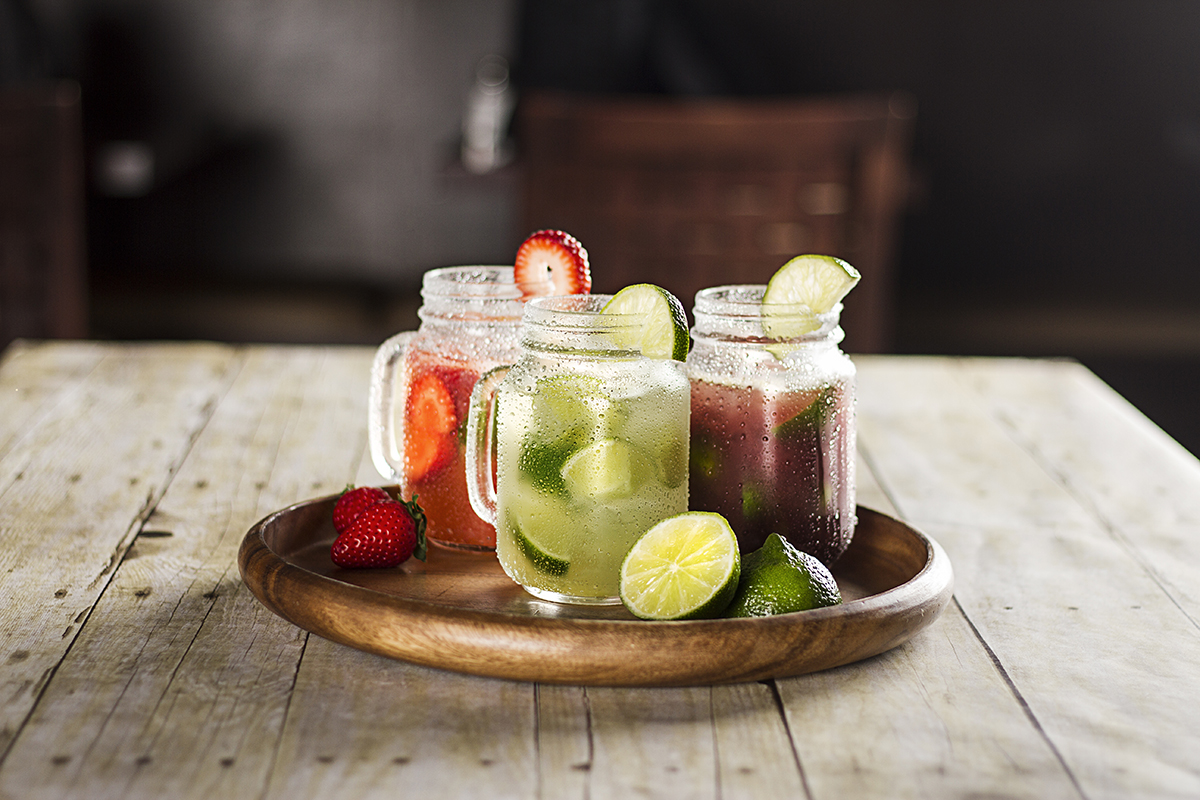
Caipirinha is Brazil’s national cocktail, made with cachaça, sugar, and lime. It is enjoyed in restaurants, bars, and many households throughout the country. Once almost unknown outside Brazil, this drink has become more popular and more widely available in recent years, in large part due to the rising availability of first-rate brands of cachaça outside Brazil. The International Bartenders Association has designated it as one of their Official Cocktails.

The word “caipirinha” is the diminutive version of the word “caipira”, which refers to someone from the countryside, being an almost exact equivalent of the “American English hillbilly.” The word may be used as either a masculine or a feminine noun, but when referring to this drink it is only feminine (usage of diminutives is common in Brazil). However, a Brazilian hardly ever thinks of a “country person” when ordering a “Caipirinha”. In the Brazilian vocabulary, the word “Caipirinha” is mostly associated with the drink itself.

What is Cachaça? What is the difference from Rum?

Cachaça is Brazil’s most common distilled alcoholic beverage. It is also known as aguardente (aguardiente), pinga, caninha or other names. It is typically between 38% and 54% alcohol by volume.Cachaça is mostly produced in Brazil, where, according to 2007 figures, 1.5 billion liters (390 million gallons) were consumed annually, compared with 15 million liters (4.0 million gallons) outside the country.

While both rum and cachaça are made from sugarcane-derived products, the major difference between cachaça and rum is that rum is usually made from molasses, a by-product from refineries that boil the cane juice to extract as much sugar crystals as possible. And cachaça is made from fresh sugarcane juice that’s fermented and distilled.

Cachaça, like rum, has two varieties: unaged (white) and aged (gold). White cachaça is usually bottled immediately after distillation and tends to be cheaper (some producers age it for up to 12 months wooden barrels to achieve a smoother blend). It is often used to prepare caipirinha and other beverages in which cachaça is an ingredient. Dark cachaça, usually seen as the “premium” variety, is aged in wood barrels and is meant to be drunk straight (it is usually aged for up to 3 years though some “ultra premium” cachaças have been aged for up to 15 years). Its flavor is influenced by the type of wood from which the barrel is made.

Sabor de Vida Caipirinha Recipe

Ingredients:

Servings: 1 (Just increase the amount accordingly to make more cups at the same time if you have a glass or wood cup that is fits more than one serving)

1 lime
1 tablespoon sugar
1 Shot of Cachaça
ice

Directions:

1 Cut the lime in quarters then cut them in half (8 pieces).
2 Put lime and sugar in a tall glass or wood Caipirinha Cup and mash with a pestle (or a wood spoon, rolling pin, etc).
3 Add the shot of Cachaça and mash the limes and sugar a bit more with the Cachaça and stir.
4 Add ice and stir again.
5 You are ready to serve! Transfer everything to a new cup with a straw and garnish with a mint leaf if you want.

What is Farofa?

July 14th, 2010

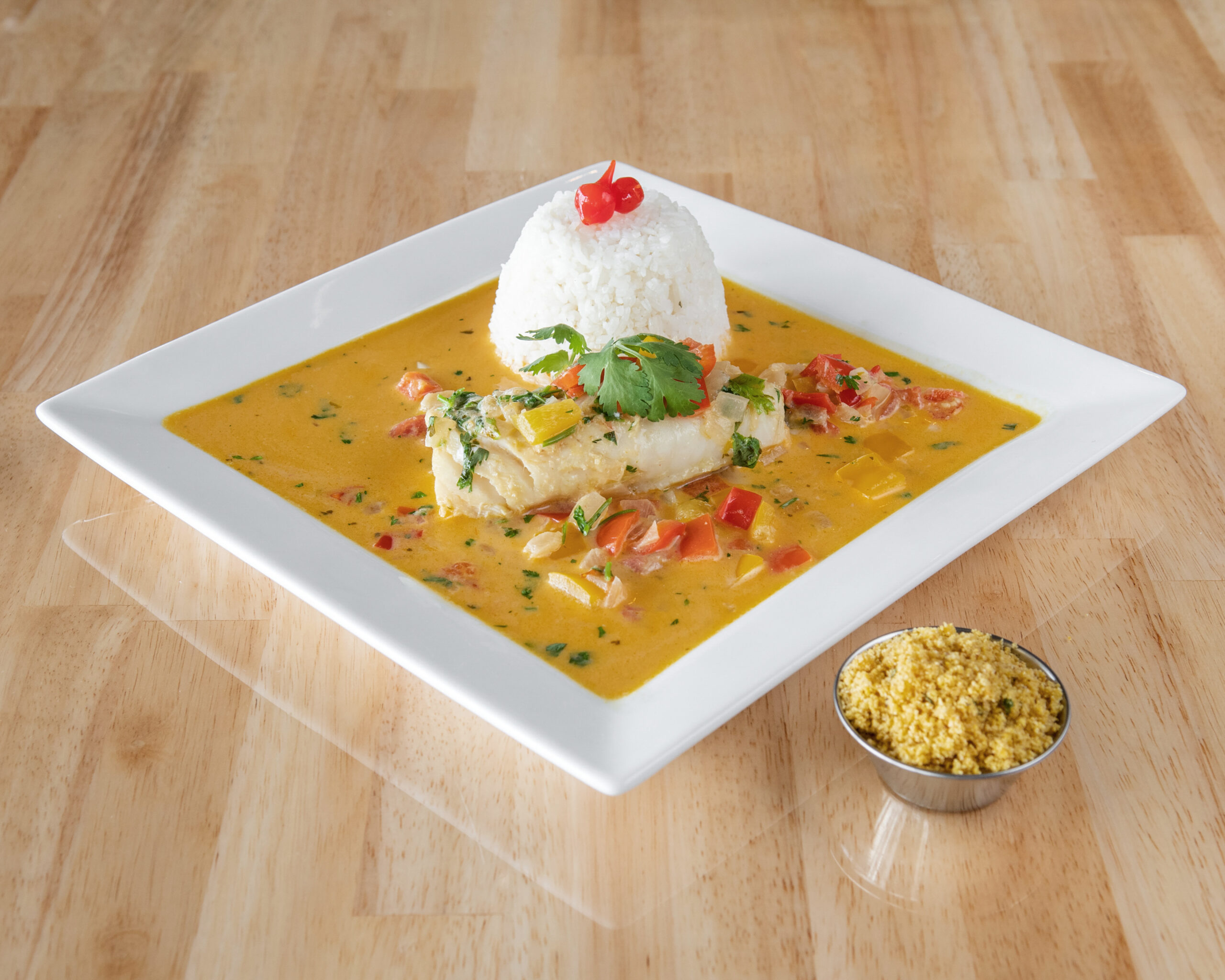
Farofa is the most well know accompaniment in Brazil. Farofa is a toasted manioc (yuca) flour mixture. It is eaten in South America and West Africa, especially in Brazil and Nigeria, which is the largest producer of manioc (yuca) or cassava flour. In Nigeria, farofa is also known as gari.

Manioc (yuca) or cassava flour is the third largest source of carbohydrates for human food in the world1. The cassava root is long and tapered, with a firm homogeneous flesh encased in a detachable rind, about 1mm thick, rough and brown on the outside. Commercial varieties can be 5 to 10 cm in diameter  at the top, and around 15 cm to 30 cm long. A woody cordon runs along the root’s axis. The flesh can be chalk-white or yellowish. Cassava roots are very rich in starch, and contain significant amounts of calcium (50 mg/100g), phosphorus (40 mg/100g) and vitamin C (25 mg/100g). However, they are poor in protein and other nutrients. In contrast, cassava leaves are a good source of protein if supplemented with the amino acid methionine2.

In Brazil farofa its an essential part of two vary popular dishes: the feijoada, the Brazilian national dish, a black beans stew dish with beef and pork and several spices; and the churrasco, the Brazilian BBQ. In both dishes the farofa is serve as an accompaniment and is always the crowed favor, you can’t have either of these two dishes without the farofa.

Since it’s large produced in Northeast Brazil where there is a higher concentration of poor people, the farofa sometimes is the only food on the table. It’s sad to say but sometimes these people are fortunate to have farofa to eat then nothing at all. Problems will come later as farofa is not a good source of nutrients on its own.

In Brazil, farofa is also a derogative slang term for a cheap day trip to the beach, especially one in which people eat a picnic on the sand and don’t pick up their trash. Someone who does a farofa is called a farofeiro. Low-income beachgoers, who can’t afford to stay overnight, will sometimes take an excursion bus for the day and also pack a lunch – a plastic bag full of farofa to go with a container of chicken being a cheap option, hence the term.

Here is the recipe for farofa3:

Ingredients:
2-3 tablespoons of oil or butter
1  chopped onion
250 g. of chopped bacon
1 package of toasted manioc flour (500 g)
chopped parsley and spring onion
salt and ground black pepper to taste

Preparation:
Sauté the onion and bacon in hot oil.
Add the flour bit by bit, all the seasonings and stir-fry well.
Put the “farofa” on a plate and serve it.

Here in San Diego, you can find the manioc or yuca flour in several Brazilian or Latin markets4. You can buy the plain manioc or yuca flour or you can buy the ready to eat farofa, pratical and convenient especially for those that want to make sure they taste the farofa flavor first before they can adventure on their own to make their especial type of farofa. Once you become familiar com the manioc or yuca flour, many other experiences and recipes will come to your mind, from eggs in the breakfast to even deserts, there is always a good fit for this flour in the Brazilian menu.


1 ^ Phillips, T. P. (1983). An overview of cassava consumption and production. In Cassava Toxicity and Thyroid; Proceedings of a Workshop, Ottawa, 1982 (International Development Research Centre Monograph 207e). pp. 83–88 [F. Delange and R. Ahluwalia. editors]. Ottawa. Canada: International Development Research Centre.

2 Cassva description from Wikipedia, the free encyclopedia.

3 Farofa Recipe from Sonia-Portuguese.com

4 List of a few markets in San Diego:

Tropical Star
6163 Balboa Ave
San Diego, CA 92111
Neighborhood: Clairemont
(858) 874-7827
www.tropicalstarrestaurant.com

Andre’s Restaurant & Latin Market
1235 Morena Blvd
San Diego, CA 92101
Neighborhood: Linda Vista
(619) 275-4114
www.andresrestaurantsd.com

Acai Boutique & Brazilian Market
1570 Garnet Ave
(between Haines St & Ingraham St)
San Diego, CA 92109
Neighborhood: Pacific Beach
(858) 270-1822
www.acaibrazilianmarket.com

Brazil by the Bay
3770 Hancock St
Ste G
(between Channel Way & Kurtz St)
San Diego, CA 92110
(619) 692-1410
www.brazilbythebay.com

Blog Introduction of Sabor de Vida Brazilian BBQ

June 15th, 2010

Hello there!

We are happy to introduce the Sabor de Vida Brazilian BBQ blog! Here you will find a lot of information not only related to Brazilian Barbecue but also a lot of content about the Brazilian culture, especially about the Gaucho culture from South of Brazil. We will bring you information about our food, costumes, traditions and much more. Also, we will be focusing on topics that we, here at Sabor de Vida love so much, like soccer, surf, beach, travel and of course culinary.

We hope to bring you some interesting information about the life style and culture we have in Brazil and our adaptation here in the US. We are proud to be here sharing this information with you and we can only thank you for being part of what we call “the Brazilian-Californian way of life”.

Please feel free to share your thoughts, comments and questions with us.

Thanks

Rafa & Ana