After a few years serving the most popular cocktail in Brazil,we’ve decided to write this blog post to address the most asked questions. Using our personal knowledge and the help of a few websites, we put together the information below and hope you will find interesting and helpful.
What is Caipirinha?
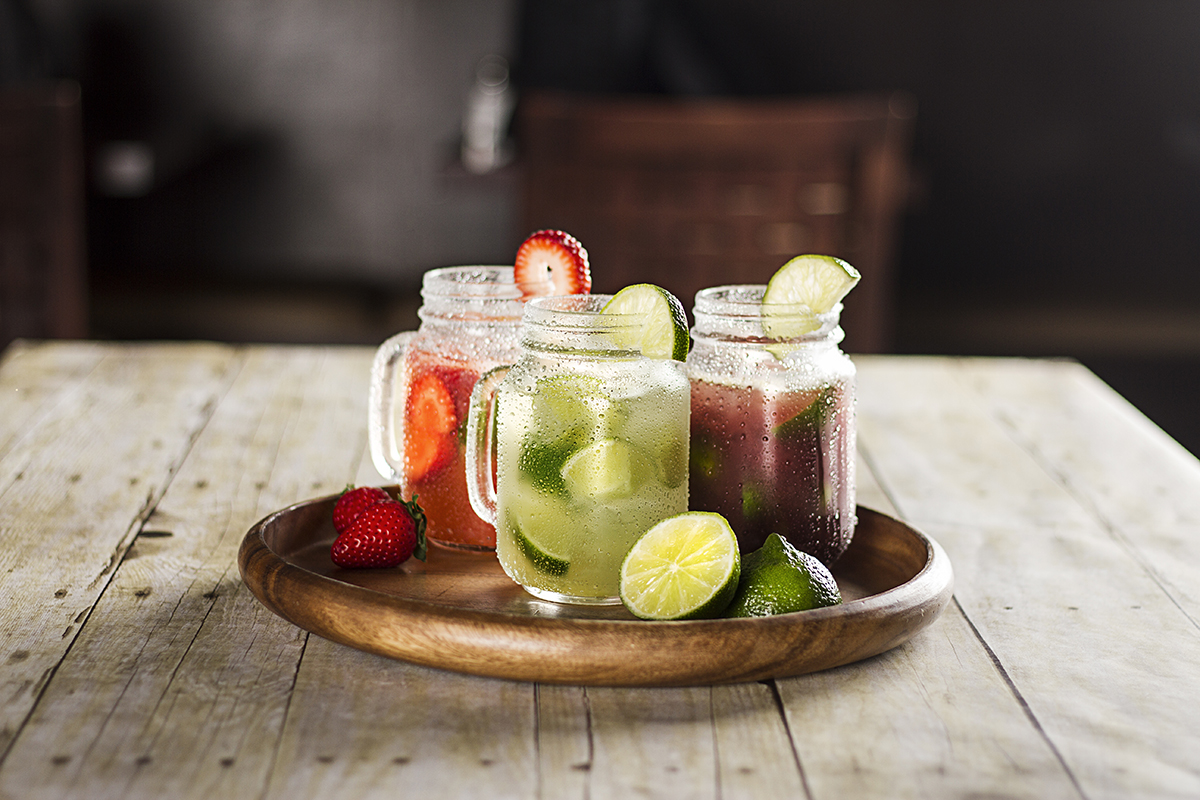
Caipirinha is Brazil’s national cocktail, made with cachaça, sugar, and lime. It is enjoyed in restaurants, bars, and many households throughout the country. Once almost unknown outside Brazil, this drink has become more popular and more widely available in recent years, in large part due to the rising availability of first-rate brands of cachaça outside Brazil. The International Bartenders Association has designated it as one of their Official Cocktails.
The word “caipirinha” is the diminutive version of the word “caipira”, which refers to someone from the countryside, being an almost exact equivalent of the “American English hillbilly.” The word may be used as either a masculine or a feminine noun, but when referring to this drink it is only feminine (usage of diminutives is common in Brazil). However, a Brazilian hardly ever thinks of a “country person” when ordering a “Caipirinha”. In the Brazilian vocabulary, the word “Caipirinha” is mostly associated with the drink itself.
What is Cachaça? What is the difference from Rum?
Cachaça is Brazil’s most common distilled alcoholic beverage. It is also known as aguardente (aguardiente), pinga, caninha or other names. It is typically between 38% and 54% alcohol by volume.Cachaça is mostly produced in Brazil, where, according to 2007 figures, 1.5 billion liters (390 million gallons) were consumed annually, compared with 15 million liters (4.0 million gallons) outside the country.
While both rum and cachaça are made from sugarcane-derived products, the major difference between cachaça and rum is that rum is usually made from molasses, a by-product from refineries that boil the cane juice to extract as much sugar crystals as possible. And cachaça is made from fresh sugarcane juice that’s fermented and distilled.
Cachaça, like rum, has two varieties: unaged (white) and aged (gold). White cachaça is usually bottled immediately after distillation and tends to be cheaper (some producers age it for up to 12 months wooden barrels to achieve a smoother blend). It is often used to prepare caipirinha and other beverages in which cachaça is an ingredient. Dark cachaça, usually seen as the “premium” variety, is aged in wood barrels and is meant to be drunk straight (it is usually aged for up to 3 years though some “ultra premium” cachaças have been aged for up to 15 years). Its flavor is influenced by the type of wood from which the barrel is made.
Sabor de Vida Caipirinha Recipe
Ingredients:
Servings: 1 (Just increase the amount accordingly to make more cups at the same time if you have a glass or wood cup that is fits more than one serving)
1 lime
1 tablespoon sugar
1 Shot of Cachaça
ice
Directions:
1 Cut the lime in quarters then cut them in half (8 pieces).
2 Put lime and sugar in a tall glass or wood Caipirinha Cup and mash with a pestle (or a wood spoon, rolling pin, etc).
3 Add the shot of Cachaça and mash the limes and sugar a bit more with the Cachaça and stir.
4 Add ice and stir again.
5 You are ready to serve! Transfer everything to a new cup with a straw and garnish with a mint leaf if you want.